Secrets of Strength Volume 3: Pause Reps

Sorry for the post hiatus, school has been hitting hard as I near the end of the last academic semester in my DPT program.  I am five months from graduation and couldn’t be more excited. But enough about me ~ let us get to the next edition of The Secrets of Strength!

Graduation_hats

When it comes to strength training it seems to be common practice for everyone to attempt PR’s everyday.  Week in and week out, people pile the weight on the bars and lift as heavy as they can until they plateau, form breaks or injury occurs.  I myself have fallen into this trap. As a young lad I would lift heavy every day, play sports and consistently over train.  The result was moderate strength and being injury plagued throughout high school and part of college. I have strained muscles, sprained my MCL, herniated a disc in my back, and broken bones. The list goes on and on.  As I gained knowledge in training and program design I learned that you do not need to lift over 90% of your 1RM every single session to get strong.  I am stronger now than I was when I was always lifting near maximal, and I have not had as many injuries or pain as compared to 4 or 5 years ago.  The sooner you can come to understand this, I guarantee you will not only be stronger than ever, but also be injury free.

Why to use Pause Reps to get strong and back off your 1 RM

Simple&Sinister

I have dabbled here and there with pause reps, but never fully incorporated them into my own programming.  That is about to change.  Once I finish the Simple and Sinister program by Pavel (which I will be writing about in the future), I will be adding pause reps into my program to aid in my strength goals.

The reason I want to add pause presses into my program, aside from using them to monitor my overall workout intensity, is to master my technique, assist me at key points of the exercise and use more muscle mass.

Mastery of Technique

Pausing at the bottom of a lift and maintaining tension is a self-limiting task.  If you use a weight too heavy and try pausing, your technique will break and you will not be able to complete the lift.  By pausing under moderate weight, you make sure your biomechanics are correct every time. This helps drive better technique.  Even though you will be lifting a percentage of the weight you normally lift, it will still kick your ass.

For example, I tend to struggle with the transition between the eccentric and concentric phases of my squat.  I will sometimes side bend or lean forward as I try to drive out of the hole.  Pause reps will help me with this problem and allow me to hit some PR’s.

Use of More Muscle Mass

When it comes to lifting, we have an eccentric and concentric portion of the lift.  As we complete the eccentric phase of an exercise, energy is stored.  This energy is stored in the passive structures, (i.e. the tendons and ligaments) and assist us in the concentric portion by releasing that energy (think of pulling on a rubber band and letting go).  When we pause in our lifts, we take these passive structures out of the equation.  We require the muscles to actively hold us, and produce enough force to move a weight.  This is the reason pause reps will still give you such a great workout.  Think about holding a weight in the hole of the squat for 2-5 seconds before having to explode out of it… I am cringing at the thought of it.  But no one said the process of gains is always fun!

Arnold Bench

How to use Pause Reps

Without thoroughly using pause reps, I am not going to prescribe percentages, reps or situations in which to incorporate them… at least not yet.  If the “why to use them” (the reasons why I will be using pause reps) intrigues you, I will refer you to an article on T-Nation by Christian Thibaudeau.  He goes into depth on how to use this methodology to help make you stronger.  You can check that out here.


Secrets of Strength Volume 2: Non-Traditional Feats of Strength

Cirque

When we think of strength, we generally think of it as how much weight one can move.  And as fun as it would be to deadlift a truck, or be able to bench press 3, 4, 500 lbs, there are other fun ways to display your strength. Would you expect to be able to perform sophisticated feats of strength with just your body weight, or maybe just simply standing up from the floor?  The answer is defined down below, and may surprise you!

5 Ways You Can Display Non-Traditional Impressive Feats of Strength

1. Turkish Get-up

  • The T-Get up is an ultimate test of strength, mobility and stability of the entire body.  You need to be able to stack your joints on top of each other and maintain stable joints under load, so the rest of your body can move without dropping a kettlebell, barbell or person on your head.
  • The movement involves lying down on the floor and standing up while maintaining a weight in the overhead position.
  • Begin this movement with a kettlebell.  Because the kettlebell keeps the weight external to the gripping hand, it offers unique advantages for shoulder health.

  • Progressions to impress
    • Barbell
    • Human Being

 2) Push-up

  • Most people that I see in the gym who are starting to workout with weights want to jump directly into the bench press and never want to start with the basics.  The push-up is the most under-rated exercise and is probably one that I see getting botched up the most.  Many people don’t have the core requirements, or were never taught the correct way to perform a perfect strict push-up.  But if you want to be impressive with your push-ups, an elite total of push-ups would be greater than 80 push-ups in a three minute period.
  • Doing this is not an eye-raising feat of strength.  If you want to up the ante, try progressing to the following.
    • One Arm Push-ups
    • One Arm – One Leg Push-ups

3. Iso 90/90 L Sit

  • This exercise requires not only significant core strength, but also considerable flexibility and upper body strength. The exercise requires you to hold yourself from a bar, rings, a tree, whatever you can grab a hold of; with elbows bent at 90 degrees and hips bent at 90 degrees.  I love exercises that require strength and tension to be developed throughout the body, that is what develops true strength.
  • To make this harder, go back to the original gymnastics L-Sit.  Press your hands into the floor and lift your butt and legs (they are to remain straight) off the floor).

4. Human Flag

  • This is probably my favorite one on the list.  This exercise crushes your entire lateral chain and requires you to build super-hero type strength that will gather crowds and applause from all. This kills your lats and obliques, and requires a lot of tension to hold.  The trick is in the pull/pull of the arms to generate enough force to allow the core to hold you up.

5. Levers

  • This is another gymnastic exercise that requires some serious core strength while turning heads when performed.  You can do these on monkey bars, tree branches, pull-up bars, rings, anything you can get your hands on.
  • The two types of levers I will be discussing here are the Front and Back levers.
    • Front Levers
      • This is an exercise that crushes your anterior core.  The arms, lats, delts, pecs and core all have to work synergistically to hold yourself in a straight line.
    • Back Levers
      • The easier of the two levers and the one that should be learned first.  The back lever attacks the posterior chain including the back, glutes, hamstrings, biceps and core.

  • If you want to learn more about training levers and other bodyweight feats, check out Al Kavado’s article here.

The aforementioned list are some fun exercises that will not only make you look more bad-ass, but will also make you stronger in your traditional strength training lifts: the dead-lift, squat, bench and overhead press.


Secrets of Strength Volume 1: Tips to a Bigger Deadlift

heavy-deadliftWhen it comes to dead lifting there are a few common mistakes that many people make.  By fixing these mistakes, you can instantly add weight to the bar and continue to get stronger while maintaining healthy joints.

1) Breathing – When it comes to life, breathing is essential.  When it comes to deadlifting… breathing is essential.  The ability to take a deep breath that fills your stomach and not your chest is vital to protecting your lower back in the deadlift.  If you need more information on breathing refer to this blog post here.

This breath causes an increase in intra-abdominal pressure, which in turn builds tension (tip 3) and keeps the spine from moving during the lift.  You can imagine that this pressure built is similar to the effects of a weight belt; it helps to support your lower back.  Why not just wear a weight belt? Because it does the work for your body and the core will never get stronger.  If you are going super heavy, 2x your body weight or more, you can add a weight belt, but you still need to have proper breathing.  If you are lifting anything less than that, you should not use a weight belt, let your core learn to protect your spine, it’s not like you can wear a weight belt every day can you?
Diaphragmatic Breathing2) Lats – The lats are the biggest players in the deadlift.  It is what connects your lower body and your upper body during the movement and keeps your back from folding like a cheap tent.  If you learn how to keep your lats tight, you will be able to increase your tension (tip #3) and lift more weight safely.  This adds to your core strength and again protects the spine.  The ability for your core to fire better, and for you to build tension is key for the success at deadlifts.

3) Tension – Here is where everyone goes wrong.  Someone can learn to breath perfect, set his or her lats tight, but when the start the deadlift, all that tension is lost.  Most commonly you see people do “the dip”.  This is where the person sets up, and brings their body closer to the floor before trying to ascend with the weight.  THIS IS AN INSTANT FAIL.  You will never be able to pull big weights that way. The second you drop all your tension is lost and you instantly become weaker.

The fix? Once you build your tension, maintain it and continue to push your feet through the floor.  Newton’s laws will take over from there.  “For every action there is an opposite and equal reaction.” Meaning if you push hard through the floor with your feet, you will eventually go up with that weight if you can produce enough force.

Want to learn more about the secrets of strength? Check out ironlionperformance.com.  Browse around, leave some comments, and sign up for their newsletter.  Upon doing so you will receive a great video on planks called the Secrets of Strength.

Questions, comments or concerns? I’d love to hear them! Leave a comment below!


Best Exercise You Ought to be Doing – The Kettlebell Pullover

2015 is here, and there are a lot of new faces in the gym.  “Resolution-ers” are filing in, jumping on the treadmill and banging out countless reps of sit-ups in hopes that this is the year they reach their goals.  If you have read my Core Training 101 post, you would already know that sit-ups are not the most effective way to strengthen your core. Nor will they help you get that six-pack you so desire.

Crunches

Enter the best core exercise in, well, ever.  The Kettlebell Pullover.  This is an exercise that I introduce to every client. I believe that it sets the foundation for strength and efficient movement.

Why you should use it-

  • Challenges The Core
    • When done correctly this exercise is taxing.  It looks easy at a glance, but when you maintain a posterior pelvic tilt and a rib pull, you will feel this like, “whoa!”  This is the type of exercise that the better you get, the harder it becomes.  If it is not difficult, you are not doing it correctly.
  • Teaches Proper Breath Patterning for Abdominal Support
    • Proper breathing is very important for your lower back and core.  And breathing properly helps maintain tightness and makes you stronger by increasing intra-abdominal pressure.  It is like wearing a weight belt without having to wear one.
    • This will ensure that you wont end up like those poor saps who wear a weight belt while walking around the gym or for arm curls.  Save those the weight belts for when you really need them to keep you from looking like a fool.Weight belt no no
  • Reinforces Technique at the Top of Squat and Deadlift
    • During the set up for the squat or deadlift, it is a common habit for people to hang out in an anterior pelvic tilt.  This puts increased stress on the lower back.  This exercise will help you build tension and find a better neutral position.  This will carry over to the top of your lifts and take excessive force off your spine.
  • Trains the deep core musculature – multifidus, transverse abdominus and obliques.
    • These muscles are very important for back health.  Studies have shown that those with recurring back pain have weak multifidi.  So this exercise can save your back!

The Technique

  • Start Position
    • Start lying on your back, with hips and knees bent at 90 degrees.
    • Grab kettlebell, medicine ball or dumbbell with arms extended over the chest
    • In this position, you will have a slight arch in your lower back.
  • The Movement
    • Flatten your lower back and sternum into the ground.  (Place an increased emphasis on your sternum and ribs)
    • Once flat, take a deep breath into your belly.
    • Reach your arms back as far as you can without any part of your lower back coming off the floor.
    • Once you reach the point in which your back wants to lift up, pull your ribs and spine harder into the ground and bring arms back to starting position.
  • Progressions
    • Make this exercise harder by
      • Lying on a foam roller
      • Putting your feet on the floor
      • Extend one leg outwards

If you can master this exercise, you will get the most out all your other core exercises. You will move better and have improved muscle activation and technique, not to mention a stronger, injury free back.


Best Articles From Last Week

I know it has been a long time since I have posted a best articles of the week post, but this series is back!  Down below are my summaries of a few articles that I found interesting and useful throughout the week (with there links below it) that I think will make for some good reading.

Hip-Thrust-Form

In today’s society, there is a great change happening in the fitness media.  The trend is not to be “model thin” anymore, but has become strong is sexy.  Along with this change, every woman wants a nicely toned derriere that would be worthy of Sir Mix A Lot “Booty Got Back” theme song. And fellas, don’t forget that woman don’t like men who have what my co-worker calls a “guillotine ass,” which is in reference to a guy with glutes so flat it looks like a guillotine had chopped it off (chopping hand gesture inserted here).   So how does one achieve this derriere especially when we live in a society that spends most of its time sitting on it?

At last, a solution! Glute Guy, Bret Contreras, has found the solution in this article. Bret uses EMG to test the differences between the squat and hip thrust to see how one could hypertrophy the glutes, so they too could land on the cover of paper magazine.

Squats vs Hip Thrusts – Bret Contreras

Running to First Base

In the strength and conditioning community running has gathered a bad rep.  If an athlete were to run, they would end up becoming small and weak, therefore, not to live happily ever after.  And in many ways this is true if that strength coach or personal trainer does not know what they are doing.  The bottom line becomes, any athlete and active person can benefit from aerobic training regardless of the goal.  The amount and intensity is all dependent on that person’s sport/lifestyle.  Read further to see why Mike Robertson, a renowned personal trainer and strength coach, recommends that aerobic training become better understood by fitness professionals as well as better utilized to help your client achieve the best results possible.

Real Talk About Aerobic Training for Athletes – Mike Roberston

LOW-CARB-PIC

I really like this article, and it does not just apply to active women.  Every person could benefit by understanding and knowing these three nutrition myths and how that can be holding you back from reaching your goals.  I especially think number three is important.  We hear that one a lot, and live and die by it, but we don’t always understand the implications of how this affects the physiology of the body.  Also, if you do cut calories, it should be cycled in and out, just as one would do in the exercise programs.  Meaning that if you were to cut calories to lose weight, it should be done in 2-4 week intervals, and then you should go back to consuming more calories.  This will serve to keep you from slowing your metabolism, losing lean muscle mass, and disrupting your hormonal balances.


Did You Reach Your Goals?

HappyNewYear2015

In January, I wrote a post talking about goal setting in which I shared my goals with you. So now its 2015, time to reflect back and see how we did!
I’ve had some pretty good success in 2014 with my fitness goals, and I hope all of you have too.  I feel most of my success came from putting myself out there and making myself accountable.  I have constantly challenged myself in front of my family, friends, peers and the internet. This put added pressure on me to keep pushing forward and to get as much out of both my nutrition and exercise as possible
Exercise January ’14 Numbers January 2014 Goals Current Numbers December 2015 Goals
Body Weight 163 lbs 175 lbs 184 lbs 185 lbs
Front Squat 195 lbs 225 lbs 205 lbs 245 lbs
Deadlift 275 lbs 315 lbs 350 lbs 400 lbs
Military Press 115 lbs 135 lbs 135 lbs 155 lbs
Turkish Get-up 88 lbs 100 lbs 96 lbs 100 lbs
Bench Press 205 lbs 225 lbs 225 lbs 250 lbs
My big 2015 goal is to have a 1,000 pounds total – meaning that if you add up all my weights lifted between my squat, deadlift and bench they would total 1,000 lbs.  Currently I am a little over 800 pounds: my squat is 245 pounds, deadlift is 350 and my bench 225.  Let’s see how close I can get by December.
Did any of you reach your goals in 2014? What are your goals for 2015?  Comment below and let me know!

Are You a Half Rep-per

I have seen all sorts of people in the gym and in hilariously ridiculous youtube videos of half rep-pers.  They load way too much weight on the bar, move it through a quarter of the range of motion, rack the weight and pound their chest.  While these people are in a cult all of their own, this is not the half rep-per I am talking about.

BadForm

The half rep-per I am talking about is most likely you.  Now, don’t get offended, you have yet to hear what I have to say yet!  But this is the single most common mistake I see in the gym day in and day out.  And it is what I refer to as half rep-ping, in its most literal sense.

What I am alluding to is a very important missing aspect of any resistance training program.  What is that, you ask!?  It is the eccentric aspect of any lift out there.

bench_press_eccentric

An eccentric contraction is a movement that causes a muscle to elongate, or is defined as the muscles insertion moving further away from the origin.  For example, when doing a bicep curl, the eccentric part of the exercise is bringing your arm back down to your side. As the forearm is moving away from the joint, the biceps muscle is getting longer.

So I know you’re wondering, well there is no way I don’t lower my arm to my side, because if I didn’t I couldn’t do my next rep.  And you’re also wondering how not doing an eccentric movement is only half the rep.  Well my friend, sit down and keep your arms and legs inside the vehicle at all times, because it’s going to be a wild ride.

What I mean by not doing the eccentric part of the exercise, is we never control that down phase.  When doing the bench press, people drop the bar until it bounces off their chest, and then they press the weight up.  In the squat, people fall into the hole and then try to grind back up to the top.  This is not necessarily wrong, but you are not getting the most out of your exercise.  This causes you to be weaker, and have less muscle.  We do this because the body likes to do things the easiest way possible.  And controlling the eccentric part of any lift takes much more energy than it does to drop the bar onto your chest, bounce it, and press it back up.

Next time you do any exercise: a lunge, squat, bench press, overhead press, pull-up, you name it – focus on controlling the weight down by squeezing the antagonistic muscles, then do the concentric phase. For exampleif doing an overhead press, press the weight overhead and as you bring the weight back down to your shoulders, squeeze your lats and pull the bar down as if you were doing a pull-up. Once the weight comes down to the shoulders,reverse the movement and bring it back over head.

You will be amazed at how much more muscle you activate doing this.  And as you progress, you will be stronger than ever.  You will start to build more muscle, have healthier joints and leave less weight on the ground.

P.S ladies, this still applies to you.  It will help you be stronger and more toned.  You will get a lot more out of your workouts and your body will thank me later.


Why eating less and exercising more doesn’t ALWAYS work for long-term weight loss

Guest Post by Eirik Garnas

I apologize in advance for posting a long post, but I think it is a great article and a good read.  Hope you enjoy!

If there’s one thing we’ve learned from the numerous studies investigating the effects of calorie restriction and exercise on weight loss, it’s that people usually creep up towards their original body weight when they start eating to satiety again or ease up on their training regime.

Despite these poor long-term results, the notion that we just have to exercise more and eat less seems so intuitively right and is also so deeply rooted in people’s belief systems that few question its accuracy. Some folks even claim that calories are all that counts and that it really doesn’t matter what you eat as long as you reduce your energy intake.

spin-class

While a subset of the population manages to stay relatively lean by doing some type of regular exercise and eating purely based on their energy and macronutrient needs, it’s clear that this doesn’t work for everyone. We’re losing the war against obesity, and it seems that the mantra to eat less and exercise more could be doing us more harm than good.

The laws of thermodynamics

There are two laws of thermodynamics that are especially relevant to body weight regulation; the first law basically states that the form of energy may change, but the total is always conserved, and the second law says that the entropy of an isolated system does not decrease.

When discussing body weight regulation it’s essential that we always adhere to these laws of thermodynamics, and recognize that the amount of energy that is contained in the body will increase if energy intake is higher than energy expenditure. This basic fact is well supported in the literature, and studies show that increased food energy supply is more than sufficient to explain the obesity epidemic (1,2). We essentially eat a lot more calories than before, and this steady rise in energy intake has driven the increases in body weight over the past several decades.

So, it’s well established that weight gain results from an imbalance between how much energy we consume and how much we expend. However, this basic fact doesn’t tell us anything about why we actually overeat.

binge eating

A general belief seems to be that weight gain simply results from inactivity, poor self-control and gluttony, and the first law of thermodynamics is extrapolated to mean that we can just tell people who are overweight and obese to eat less and exercise more to permanently shed the fat. The problem with this analogy is that the human body isn’t a passive vehicle, but rather fights to maintain what it considers to be a balanced state.

If we look beyond the basic concept of calories in vs. calories out and start to dig a little deeper into human physiology and the scientific literature, it quickly becomes clear why deliberately restricting calories and exercising more isn’t an effective strategy for permanent weight loss for many individuals.

You’re fighting your brain’s hard-wired mechanisms for regulating fat storage

Have you ever wondered how some people maintain a relatively constant body weight year round, why an obese person over-consumes food even though he has plenty of stored energy in the form of body fat, or why restricting caloric intake doesn’t result in a linear decrease in fat mass depending on the magnitude of restriction?

The answers to these questions seem to lie in the intricate feedback system between the brain, gut, and fat cells…

The body fat setpoint and homeostatic regulation of body fat

In 1840, a doctor named B. Mohr was one of the first researchers to discover that obese people often have damage in certain areas of the brain. Since these first discoveries, we’ve learned that the hypothalamus in the brain is the primary control center for the system in our body that regulates fat storage on a long-term basis (the energy homeostasis system).

The amount of fat mass we carry is biologically regulated, and the brain tries to keep body fat within a certain range by influencing our appetite, body heat production, metabolic rate, and whether energy is directed towards fat tissue or lean mass. We essentially have a body fat setpoint that the brain homeostatically guards (3,4,5,6).

If we try to alter the amount of body fat we carry by manipulating food intake and physical activity induced energy expenditure, the brain will act to bring fat mass back to the original level by increasing hunger and decreasing energy output. Since these mechanisms can only prevent a certain degree of fat loss, we will naturally start to lose weight when we reduce the amount of calories we consume and/or exercise more. However, as most people who have restricted calories for some time know, we will also be hungry and tired.

Tired-Athlete

As sustained voluntary calorie restriction significantly impacts the quality of life and requires a high level of discipline, most people eventually start to eat to satiety again and usually creep back up towards their original body weight.

A study published in the American Journal of Clinical Nutrition clearly illustrates the idea behind the body fat setpoint. They gave lean and overweight subjects a diet that contained 50% more calories than they naturally consumed, and as expected, all of the participants gained a significant amount of weight during the six weeks of overfeeding. The brain tried to defend the body fat setpoint by increasing metabolic rate and body heat production, but these compensatory mechanisms can only prevent a certain degree of fat gain. The interesting thing happened when the overfeeding phase was over and subjects were allowed to eat as much as they wanted for the following six weeks. All of the participants lost the majority of the weight they had gained although they didn’t restrict calories (7).

Calorie restricted dietary interventions point to the same thing; while deliberately reducing energy intake and increasing energy expenditure is necessary for someone who’s already lean and wants to lose more weight, it’s not a long-term strategy for those that are overweight and obese. What we have to do is acknowledge that weight loss isn’t just about making a conscious decision to eat less and exercise more.

The thermostat in your house is a good representation of how the homoestatic system works. If it’s cold outside and you open all the windows to your house, the heating system will kick in to try to keep the temperature around the adjusted setpoint (e.g., 72 degrees F). If you keep the windows open, the heating system will always try to get the temperature back up, but it can only compensate for some of the lost energy. However, if we close the windows, the temperature will quickly rise back to the original setpoint.

The same principles apply to homeostatic regulation of body fat. If we expend energy by exercising more or eating less, the brain will decrease metabolic rate, increase hunger, reduce body heat production, etc. in an attempt to fight fat loss. If we chronically restrict calories we will lose weight, but the body will always try to get things back to what it considers to be a balanced state. When we can no longer take the cravings and begin eating to fullness, our body weight creeps back up towards the original setpoint, and we get a feeling of defeat and failure.

The brain is less sensitive to signals from fat cells in people who are overweight and obese

If the energy homeostasis system was always working properly, no one would be obese. Why doesn’t the the brain respond to the elevated fat mass in people who are overweight by decreasing hunger and increasing metabolic rate, heat production, and use of stored fat as energy?

Part of the answer to this question is found in the negative feedback system between fat stores and the brain. Signaling hormones travel between fat cells and the control center in our head and enable the brain to measure and regulate the amount of body fat we carry.

The key hormone involved in this process is Leptin. Leptin is produced by the body’s fat stores which then travels to the brain where it produces a response at the receptors in the hypothalamus. A high leptin signal is supposed to ramp up the use of stored energy and trigger less interest in food, while a low leptin signal should initiate food seeking behaviour and energy conservation (3,5).

Since leptin production correlates with with the size of the fat stores, people who carry plenty of fat mass produce a lot more leptin than someone who is lean. So, why isn’t the brain responding to these high concentrations of circulating leptin by decreasing interest in food and burning more stored energy? Studies have made it clear that overweight and obesity are characterized by decreased leptin sensitivity, which means that the brain doesn’t respond adequately to the signal from leptin (5,8).

Let’s consider an example to illustrate the effects of leptin resistance on weight gain. Let’s say we have a woman who weighs 300 lbs. Although the fat stores of this person produce a substantial amount of leptin, the brain only responds partially to the signal and therefore thinks that the body carries less fat mass than it actually does. If the woman loses even more leptin sensitivity, the brain will trigger hunger and decreased energy expenditure in an attempt to store more fat and boost leptin production further.

So, it could seem that the more leptin resistant we become, the more body fat we have to carry to maintain the same level of leptin signaling in the brain. If we suddenly become very leptin resistant and the brain only receives half the signal from leptin (hypothetical), fat mass will double over time and we will settle in at a new, higher body fat setpoint.

leptin

This is not to say that leptin is the only factor involved in the feedback mechanism between fat cells and the brain, far from it. However, leptin signaling seems to be a key component and is also intuitively easy to grasp in the sense that leptin resistance is similar to a malfunctioning “thermostat”. While a lean person’s fat thermostat keeps body weight around a lean setpoint, the thermostat of someone who is obese is constantly elevated.

Leanness is the most natural state of the human body, and a perturbation of the energy homeostasis system results from a gene-environment mismatch

Have you ever considered the fact that humans and animals living in a specific ecological niche are relatively lean almost year round? Wild animals, hunter-gatherer tribes and some non-westernized populations all maintain a fairly low level of body fat, and increases in fat mass only happen when it’s appropriate for survival and reproduction (9,10,11). As I discussed in my last guest post at BretContreras.com, some traditional populations such as the Kitavans remain lean even though they have access to an abundance of food and are only moderately physically active. Studies also show that hunter-gatherers have leptin levels that are many times lower than westerners, indicating a well-functioning feedback system between fat cells and the brain (8,12).

While this doesn’t mean that we have to emulate the lifestyle of our paleolithic ancestors to be healthy, it does suggest that some aspects of our modern environment perturb the body’s mechanisms for regulating fat storage.

The key in figuring out why the body fat setpoint is elevated in overweight and obesity is to study non-industrial populations that are lean and healthy, and then use this information as a framework for deciphering the latest scientific research on homeostatic regulation of body fat. Only by removing the factors that cause the body to want to store more weight can we design an effective weight loss strategy.

So, how do I lower my body fat setpoint and lose weight?

While there’s still a lot we don’t know about the underlying causes of leptin resistance, elevated body mass setpoint and overeating, it’s clear that changes to the setpoint can be both a cause and consequence of weight gain, and that inflammation in the hypothalamus and food reward play an especially important role (3,5,13). That’s all well and good, but what we really need to know is how we can tweak our diet and lifestyle to lower the setpoint, eat less without deliberately restricting calories, and lose weight. Let’s briefly take a look at some of the practical solutions to long-term weight loss.

Avoid highly rewarding food

Numerous obesity researchers now consider food reward to be an essential factor in the modern obesity epidemic (3,4,14,15). The reward center in our brain labels things as good or bad and makes us seek out energy dense food, warmth, sex and other types of behaviours that benefit survival and reproduction in a natural environment.

The problem is that this system isn’t designed to handle Big Mac’s, donuts, cookies, and other western foods. These processed products are engineered to be addictive in the sense that they contain a wide spectrum of rewarding properties such as fat, starch, salt, sugar, and glutamate. And it’s not just the highly processed stuff that is problematic. Even salted nuts and deep-fried, cured bacon contain a fairly rewarding combination of fat and salt and probably shouldn’t make up a large part of your diet if your trying to lose weight.

donuts

So, what this basically means is that the energy homeostasis system evolved to deal with simple, whole foods such as meat, fresh fruits and vegetables, and that modern, processed foods alter the brain’s mechanisms for regulating fat storage. Studies suggest that leptin action in the brain is insufficient to inhibit overeating of highly processed food, because these rewarding products engage powerful neural responses that oppose leptin (5).

It’s really a vicious cycle where hyper-rewarding food triggers addictive processes in the brain and overeating. Energy imbalance leads to more fat mass, leptin resistance, and consequently a higher food intake (15).

Bottom line: Highly rewarding, processed food drives weight gain. A diet primarily composed of simple, whole foods should be the key component of any weight loss program.

Take good care of the trillions of microorganisms that live in and on your body

Besides food reward, all of the microbes that live in and on the human body (the human microbiome) seem to play an essential role in the whole process of inflammation, leptin resistance, and weight gain. In a guest post for BretContreras.com, I highlighted the fact that the human body is only 1% human from a genetic perspective and that the microbiome provides functions that stretch far beyond the physiological capabilities of the human host.

The bacteria living in the gastrointestinal tract (gut microbiota) are especially important to our overall health as they maintain healthy gut barrier function, digest otherwise indigestible food components, and regulate our immune system. The problem is that antibiotics, highly processed food, caesarean sections, and other factors associated with life in the modern world perturb the microbiome and promote a state of dysbiosis. The balance of “good” and “bad” microbes in the body has shifted, and the gut microbiota becomes inflammatory.

So, how is it that bacteria potentially can influence systemic inflammation, leptin sensitivity, and weight gain? One of the leading current hypotheses is that dysbiosis increases gut permeability and allows toxins found in the wall of proinflammatory bacteria to interact with our immune system and enter into systemic circulation. These endotoxins then trigger a state of low-grade chronic inflammation and leptin resistance in the hypothalamus (8,16).

microbiome

The human microbiome is one of the hottest topics in the scientific community at the moment, and numerous studies show that obesity is associated with changes to the gut microbiota (17,18). So, although the human microbiome is shaped throughout our life, it’s largely inherited from our family, and part of the hereditary component of obesity therefore results from transferring an “obese microbiota” from mother to child.

While more long-term human studies are needed before we know to which extent bacteria affect weight regulation, it’s already clear that the human microbiome has a profound impact on our health and well-being.

Bottom line: The human microbiome is involved in body fat regulation. Avoid antibiotics if possible, breastfeed your children, and preferably perform a vaginal birth. Avoid food that promotes the growth of harmful bacteria (e.g., highly processed food, refined flours, sugar), eat food that encourages the growth of beneficial bacteria (e.g., onions, leeks, properly prepared legumes), and eat “probiotics” (e.g., sauerkraut, kefir, dirty vegetables from the garden).

Exercise to improve metabolic health and build muscle

I know I’ve just made the case that exercising really isn’t effective for weight loss, but let’s look a little deeper. About a year ago I reviewed the scientific literature on exercise and weight regulation and concluded that isolated anaerobic or aerobic exercise usually isn’t very effective for weight loss. Most people compensate for the increased energy expenditure by eating more and/or being less active during the rest of the day, and exercising to “burn the fat” therefore makes little sense. This is also consistent with the body fat setpoint theory which suggests that the brain homeostatically guards a certain amount of fat mass.

Resistance-Training-Women

However, some people respond to exercise by losing a fair amount of weight, and this probably has to do with the beneficial effects exercise has on metabolic health. A moderate amount of exercise has been shown to reduce inflammation and improve leptin and insulin sensitivity (19,20,21,22,23).

For the record, no one’s arguing that heavy resistance training and aerobic exercise aren’t an important part of a healthy lifestyle, it’s just that exercising to lose weight (and keep it off) isn’t effective for the vast majoity of people.

Bottom line: Exercising to “burn calories” makes little sense since most people compensate for the increased energy output by eating more food and/or being less active during the rest of the day. However, regular exercise allows you to eat more food without gaining weight and can also have a small impact on weight loss.

Make sure you’re eating enough protein

The Protein-Leverage Hypothesis suggests that humans aim for a targeted protein intake and that protein is prioritized over fat, carbohydrate, and total energy intake (24,25,26). A recent study also shows that body-weight loss and weight-maintenance on a low-carbohydrate diet seems to depend more on the protein consumption than the carbohydrate intake (27).

protein

One common mistake among people who want to lose weight is to only eat foods such as fruits and vegetables in an attempt to reduce energy intake. While fruits and vegetables are great, they are also very low in protein and energy and should be matched with grass-fed meats, seafood, eggs or dairy to make for a more satiating meal. Eating carrots, cucumbers and tomatoes for breakfast and lunch won’t help your weight loss efforts since your body will crave for more energy and protein later in the day.

Bottom line: Protein is a very satiating macronutrient and should make up at least 15% of your daily energy intake.

Properly prepare whole grains, legumes and other plant foods that are difficult to digest

While everyone agrees that refined flours shouldn’t make up a large part of a healthy diet, some researchers have also speculated that the human leptin system isn’t adapted to a diet based on whole grains because antinutrients and proteins in cereal grains potentially contribute to leaky gut, inflammation, and leptin resistance (8,28,29). While some reports suggest that a grain-free diet is superior to a grain-based diet in terms of weight loss (8), few long-term human studies have found a causal link between consumption of grain fiber and weight gain.

Sensitivity to “toxins” found in grains seems to vary from person to person depending on human genetics, gut health, and whether we have the necessary microbial genes in the intestine to degrade harmful antinutrients and proteins. The problem seems to be that many people make cereal grains the staple of their diet and therefore eat less of more satiating foods such as fruits and vegetables (30).

The fact is that modern wheat is very different from the grains our ancestors used to eat. While celiac disease affects below 1% of the population, some studies suggest that gluten sensitivity is on the rise, and gluten and wheat germ agglutinin can be damaging even for those without celiac disease (31,32,33). A recent study also found that a gluten-free diet reduces adiposity, inflammation, and insulin resistance (34). Although several recent diet books make the case that gluten should be avoided by everyone, the fact is that few long-term human trials have investigated the effects of gluten on body weight regulation and health.
soaking-grains

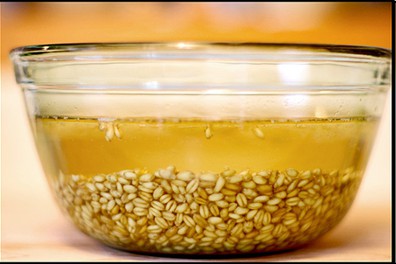
Healthy grain-based cultures usually soaked, grinded and/or fermented grains and legumes to make them more nutritious and easier to digest. Using these traditional processing techniques could be a viable option if you’re sensitive to antinutrients and/or eat a lot of legumes and cereal grains on a daily basis. Even just soaking oats overnight in water and lemon juice and then cooking over low-moderate heat will make for a healthier dish than just plain oats and milk.

Bottom line: Improperly prepared cereal grains are hard on the digestive system, but more research is needed to establish the exact role antinutrients and proteins such as gluten play in the modern obesity epidemic. Eating grains at the majority of your meals probably isn’t a good idea if you’re trying to lose weight, because grains contain some potential gut-irritating compounds and are typically lower in micronutrients and less satiating compared to fruits and vegetables. Traditional processing techniques make whole grains and legumes easier to digest.

Other strategies to lower inflammation and/or unconsciously reduce food intake

Several other factors such as insufficient sleep (35,36,37), high omega-6/omega-3 ratio (38,39,40), low vitamin D levels (41,42) and high cooking temperature (43,44,45) have also been associated with increased low-grade inflammation and/or obesity. While probably not as important as the major factors above, these things also play a role.

Putting it all together

Areas in the brain maintain the size of the fat stores within a certain range by influencing food intake and energy expenditure. In a “natural” environment, the energy homeostasis system regulates body weight at a level that is optimal for survival and reproduction, and leanness is therefore the natural state of Homo sapiens. Dysregulation of the energy homeostasis system and elevation of the body fat setpoint result from a gene-environment mismatch in the sense that the body’s mechanisms for regulating fat storage aren’t designed to handle highly rewarding food, broad-spectrum antibiotics, insufficient sleep on a long-term basis, and other factors associated with life in the modern world. If we try to lose weight by increasing exercise induced energy expenditure and/or restricting calories, areas in the brain that are responsible for regulating fat storage will trigger hunger and decreased energy expenditure in an attempt to regain the lost fat mass. To be able to design a plan that will cause permanent weight loss, we have to address the factors that are causing the body to want to store more weight. Only then can we ramp up the use of stored body fat and eat less without deliberately restricting calories.

I want to make it perfectly clear that deliberate calorie restriction is necessary if you are already relatively lean, but still want to lose more weight. The reason for this seems to be that very low fat mass is below what is considered optimal for survival and reproduction, and the brain therefore protects fat stores by increasing hunger and decreasing body heat production and metabolic rate. I also want to emphasise that although everyone can lose a substantial amount of weight if they adhere to the principles outlined in this post, genetics do matter.

muscular kid

Eat a diet primarily composed of simple, whole foods such as meat, seafood, eggs, vegetables, grass-fed dairy, fruits, nuts, and properly prepared whole grains and legumes. Make sure you get enough protein. Take care of the microbiome by eating prebiotics, beneficial bacteria, and avoiding food that encourages growth of harmful bacteria. Exercise to improve metabolic health, try to get enough sleep, make sure you’re getting enough vitamin D and omega-3, and reduce the production of advanced glycation end products by gently cooking your food.

Individual differences are important, and while some people are able to stay lean while still eating a fair amount of highly-processed food, others must make a significant effort to reduce the reward value of the diet, improve gut health, and follow all the other recommendations.

My Two Cents

I just wanted to add a short tid-bit here because I do not want people to take parts of this article out of context. Particularly the part saying that exercise and cutting calories are not an efficient way to lose weight.  What Eirik is trying to say here is that those two things are not enough based on the research presented.  Yes we need to exercise, it can lead to body composition changes, There is no doubt that increasing muscle mass and cutting calories will have a positive effect on how you look, feel and function.  But there are also other reasons that can be causing one to be overweight and struggle to lose the weight, and or plateau at certain points that they can not break through.

Please comment with your questions and thoughts below.  I would love to hear them!

About the author

eirik-garnas_organic-fitness-author

Name: Eirik Garnas
Website: www.OrganicFitness.com
Besides studying for a degree in Public Nutrition, I’ve spent the last couple of years coaching people on their way to a healthier body and better physique. I’m educated as a personal trainer from the Norwegian School of Sport Sciences and also have additional courses in sales/coaching, kettlebells, body analysis, and functional rehabilitation. Subscribe to my website if you want to read more of my articles on fitness, nutrition, and health 


Staying True to Your New Years Resolutions

Happy Holidays everybody, and Happy New Year.  It is an exciting time because a New Year is beginning, new opportunities are on the horizon, and well, there is a new blog post here!

That time of year is here when the gyms are getting busy again because everyone is done feeling guilty about what they have eaten during the holiday season.  And they are ready to start off the New Year the right way with a better, healthier them.  But as February and March roll around, those once exciting goals of losing weight, getting shredded and looking like a sexified Ryan Grosling are in the past.  Well let’s hope this year, this IS NOT you!  And one way to do that, is reading this here post as it will give you a guide to staying on track for the long term.

Gosling

RULE #1: Keep Goals

The only way to achieve success, not just in the gym but in life, is to set goals.  I already spoke of this in a past post, and I think it is very important.  Your goals must be specific and obtainable.  If not, failure is often the case.  Goals give you a direction, and when you obtain them they are much more gratifying.

Here is a list of my weight lifting goals for 2014:

Weight = 175 lbs- Currently 163 lbs

Front Squat = 225 lbs – Currently 195 lbs

Deadlift = 315 lbs – Currently 275 lbs

Military Press = 135 lbs – Currently 115 lbs

Turkish Get-up = 100 lbs – Currently 88 lbs

I have toned down how high I set my goals this year. With school it gets very hard to continually progress without overtaxing myself.  I believe I will have no problems reaching these goals, or surpassing all of them by 2015.

RULE #2: Get a Friend 

FUnny workout ecard

Make sure that person’s goals fit with yours.  

Otherwise they could potentially be very bad influences.

Having somebody with similar goals as you will make your journey easier.  Recruit a friend or family member to join you in reaching your goals.  Maybe it is to lose 20 pounds, or walk 10,000 steps a day, or bike 50 miles a week.  Whatever the goal is having somebody at your side makes reaching your goals less daunting.  This also makes you accountable to someone else, which means you are making a commitment.  If you had to meet your best friend at the gym at 8am every morning, you can’t just skip on them.  Well you can, but that would be pretty douchey of you.

RULE #3: Tell People

By telling everybody around you what your goals are and how you’re going to achieve them this year will put more pressure on you and make you commit to your goals more.  Tell people on a consistent basis.  This does two things, one it does what I said before; it puts pressure on you, because who wants to fail in front of their friends and family?  And two, by constantly talking about your goals and how you will achieve them will help you believe that you will accomplish your goals in your own mind.  Once you feel like you can accomplish your goals, your chances of doing so are greatly improved.

RULE #4: Check Your Progress

Pick a regular interval that you will test your progress. So if you want a 315 bench and you currently are benching 250, you must test your bench every month or so to see if you are moving closer to your goals.  If you are not moving towards your goals, you must sit down and think why.  Is it my nutrition, lack of sleep, have I been inconsistent, etc… Once you figure this out, it will help you break through those frustrating plateaus that we all hit from time to time.


Exercise of the Month: Kettlebell Arm Bar

Hello everybody, welcome to my first edition of the exercise of the month, the Kettlebell Arm Bar.  It is very nice to have some time off from school so I can put some work into this blog.  And my brain is fresh so you know you are getting top quality work!

Since kettlebells are a pretty big thing these days, and they are found in almost every gym, I figured I’d start off the exercise of the month with a great shoulder strengthener/mobilizer/stabilizer that I use every week I work out.

Kettlebells

Why I love this exercise:

· Improves your shoulder stability:  The kettlebells have this great feature that no other piece of gym equipment can offer, the center of gravity of the weight is not in your hand.  With a kettlebell, the majority of the weight is in the bell which is not what you’re holding.  You are holding the handle, which is being pulled down by the weight of the bell.  This allows for greater muscle activity/stabilization as the resistance arm has A) been increased and B) requires higher control of the muscles at hand.  This all allows for the shoulders stabilization to increase.

· Improves Thoracic mobility – As you roll over and drive your hips into the ground, this will open up your thoracic spine, making it more mobile.  Combine a mobility movement with stability and watch your range of motion increase.  We call this sticking.  It’s very common to stretch and a day later be just as tight as the day before.  But add some strength and stability during a mobility exercise, and watch it stick. Meaning 2, 3, 4, 100 days later, you will feel looser then you do right now, not doing this exercise.

· Improves shoulder strength – By teaching your body how to stabilize itself through the lats and rotator cuff, it well help increase the strength of shoulder by association.  The shoulders thrive off stability.  An unstable shoulder will leave lots of weights on the ground, and will keep you from reaching your full potential.  The more stable those shoulders are, the stronger your grip is; the stronger irradiation of energy through your body equals you being stronger and less likely to get hurt.  What’s not to like about that?

TECHNIQUE

· First, for safety reasons, we begin cradling the kettlebell.  That is us lying on our sides grasping the kettlebell between interlaced fingers – seen in video above.

· From here we can safely roll over onto our back.  Extending the arm that is holding the KB and bending the knee with the same side leg.

· Once in position, get the core tight and pack your scapula.  I like using the cue spread your lats rather then pull shoulder blades back and down.  But you can use whatever gives you the best results.

· Once set, you must rotate over to your side; keep in mind you are not mindlessly rotating.  Your body must stay connected and you must rotate through your core, the whole body rotates as a segment.  To do this you must push your heels into the ground and keep your glutes tight.  This will allow you to get to your side.

· From here, maintain your tightness as your lift your leg up and over the stationary leg.

· Now, squeeze your glutes hard as if you were trying to press your pelvis into the floor.  Almost as if you were trying really hard to lay on your belly.

· Hold for a specific count or amount of breaths.  I typically do 15 seconds, but it depends on your goals here, and rationale for doing arm bars in the first place.

· Once you’re done with the rep, roll back over to your back with the same tightness you rolled over with.

· Pull the KB back to your chest.

· Roll over to the cradled position.

· BAM YOU ARE DONE!

· … Now do the other side.

Currently, the way I am inserting this exercise into my workouts is I super-set it with my bench press.  I will do this exercise before I bench so it will increase my shoulder stabilization and work on me using my lats, since the lats are a big player in a strong bench press.

You can also use this on your off days, as a warm-up or during any other part of your workout, as long as you have a reason to increase shoulder mobility, stability and strength (which will ALWAYS be the case).